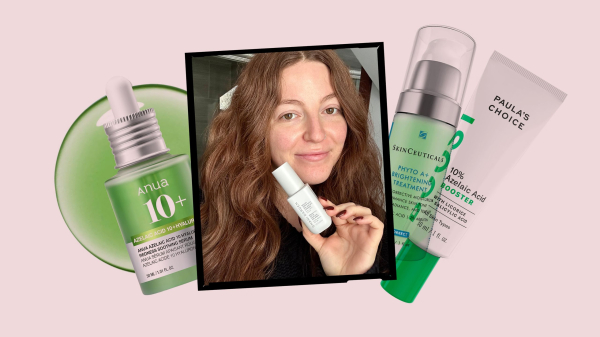
 Collage: Paula Balondo; Source images: Courtesy of Allure editor and brandsSave this storySave this story
Treating acne (and the discoloration it leaves behind) is no easy task, but the best azelaic acid serums can speed up the process. If you're a skin-care enthusiast, you've likely heard of—and experimented with—a handful of acids, be it glycolic, salicylic, or polyhydroxy. However, azelaic acid is particularly effective at killing acne-causing bacteria, loosening dead skin cells to unclog pores, reducing inflammation, and evening skin tone (all without irritating sensitive skin types). "[Azelaic acid serum] is a great product to use in combination with other acne medicines or alone,” says Ava Shamban, MD, a Beverly Hills-based board-certified dermatologist. If your skin-care concerns involve pesky pimples, dark spots, and redness, we've rounded up the best azelaic acid-infused serums to add to your routine, stat.
Our Top Azelaic Acid Serums:
- Best Overall: La Roche-Posay Effaclar A.Z. Gel Azelaic Acid Acne Treatment, $43
- Best for Uneven Tone: Shani Darden Skin Care Rescue Serum with 10% Azelaic Complex, $68
- Best for Acne-Prone Skin: SkinCeuticals Phyto A+ Brightening Treatment, $115
- Best for Redness: Anua Azelaic Acid 10 Hyaluron Redness Soothing Serum, $22
Frequently Asked QuestionsLargeChevron
- What is azelaic acid?
- Who can use azelaic acid?
- Can azelaic acid be used with retinoids?
- Meet the experts
- How we test and review products
- Our staff and testers
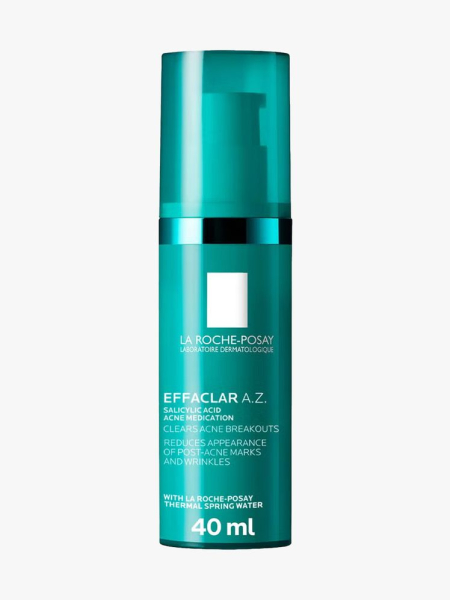
Best Overall: La Roche-Posay Effaclar A.Z. Gel Azelaic Acid Acne Treatment
 Save to wishlist
La Roche-Posay
Effaclar A.Z. Gel Azelaic Acid Acne Treatment
Amazon
Dermstore
Allure editor in chief Jessica Cruel applying the La Roche-Posay Effaclar A.Z. Gel Azelaic Acid Acne Treatment
Jessica Cruel
Why it's worth it: Ever wish treating both acne and fine lines was as easy as snapping your fingers? La Roche-Posay’s Effaclar A.Z. Gel Azelaic Acid Acne Treatment isn’t a magic trick, but this multitasking gel comes pretty close. Designed to tackle multiple skin concerns in a single pump, it pairs azelaic acid to gently resurface skin and fade the look of post-acne marks with 1.2% salicylic acid, which exfoliates inside pores to help clear breakouts and refine their appearance (especially key for oily or congestion-prone skin). Hyaluronic acid delivers lightweight hydration to smooth fine lines, while zinc helps purify skin and keep shine in check. “It’s a well-rounded formula that sits nicely beneath moisturizer, SPF, and makeup,” says Jenna Queller, MD, a board-certified dermatologist based in Boca Raton, Florida.
One thing worth noting: Although the brand is known for its fragrance-free formulas, this one does list fragrance toward the end of the ingredient list—likely added in a minimal amount to offset the naturally metallic scent zinc can sometimes have in skin care. If your skin is sensitive, start with a patch test first.
Tester feedback from editor in chief Jessica Cruel
LargeChevron
“This acne treatment combines azelaic and salicylic acids to treat active breakouts. After just one day of using it, I noticed my pimple had reduced in size. What I like about this formula is that you can use it well after the pimple is gone. Azelaic acid can help with hyperpigmentation and superficial post-acne marks. Some acne treatments are super drying, but this one is moisturizing enough to be a part of my daily routine." —Jessica Cruel, editor in chief
More to know
LargeChevron
- Key ingredients: azelaic acid (percentage undisclosed), 1.2% salicylic acid, hyaluronic acid, zinc
- Who it's for: people with fine lines and acne
- Fragrance-free: no
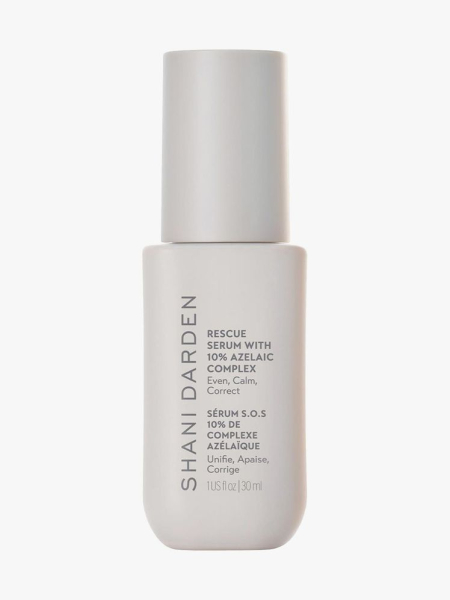
Best for Uneven Tone: Shani Darden Skin Care Rescue Serum With 10% Azelaic Complex
 Save to wishlist
Shani Darden
Rescue Serum with 10% Azelaic Complex
Amazon
Nordstrom
Sephora
Allure senior staff writer Elizabeth Gulino applying the Shani Darden Skin Care Rescue Serum With 10% Azelaic Complex
Elizabeth Gulino
Why it's worth it: Shani Darden Skin Care’s Rescue Serum features mid-strength 10% azelaic acid, a Goldilocks-level dose to target acne and dark spots without veering into irritation-causing levels for sensitive skin. Made specifically for targeting discoloration and inflammation, this calming face serum combines azelaic acid’s soothing properties with other skin-coddling favorites, including oat kernel extract, hyaluronic acid, and aloe vera. To double down on its tone-evening properties, this serum is also infused with brightening licorice root extract and antioxidant panthenol.
Tester feedback from senior staff writer Elizabeth Gulino
LargeChevron
“I've been using this product almost daily since November, and I can confidently say that my skin has been brighter and my redness more toned down since adding this into my routine. It's light and not greasy, which is a huge pet peeve of mine when it comes to products. I'm really obsessed with the packaging—it's luxe and heavy in a way that's not annoying. The scent isn't amazing, but I'd rather have calm and hydrated skin over a product that doesn't work and smells like roses.” —Elizabeth Gulino, senior staff writer
More to know
LargeChevron
- Key ingredients: 10% azelaic acid, oat kernel extract, aloe vera extract, licorice root extract, panthenol, hyaluronic acid
- Who it's for: all skin types, including sensitive
- Fragrance-free: yes
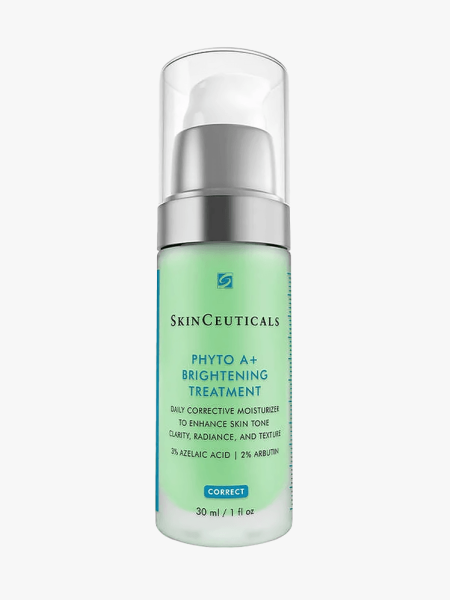
Best for Acne-Prone Skin: SkinCeuticals Phyto A+ Brightening Treatment
 Save to wishlist
SkinCeuticals
Phyto A+ Brightening Treatment
SkinCeuticals
Dermstore
Bluemercury
Allure contributing commerce editor Deanna Pai applying the SkinCeuticals Phyto A+ Brightening Treatment
Deanna Pai
Why it's worth it: SkinCeuticals' Phyto A+ Brightening Treatment contains 3% azelaic acid (a lower dose of the ingredient to avoid sensitizing skin) and 2% brightening alpha arbutin, a gentler derivative of the somewhat controversial hydroquinone. This green-tinted serum also contains a calming botanical blend of cucumber, thyme, and olive leaf extracts to calm redness and irritation. Bonus: It has a refreshing, soothing feel, while the tint neutralizes redness on the spot. "Its lightweight, oil-free, silicone-free, [and] non-comedogenic formula is suitable for acne-prone and sensitive skin," says Michele Green, MD, a New York City-based board-certified dermatologist.
Tester feedback from contributing commerce editor Deanna Pai
LargeChevron
“My dermatologist recommended I switch from retinoids to azelaic acid when I was pregnant with my first daughter to fade my dark spots, which led me to this skin-brightening formula—and now, with two kids underfoot, I still pull it out every time I have a breakout, since it works wonders for calming inflammatory zits and evening out my skin tone. First, I love that it's a moisturizer, making it easy to pop into my routine instead of my usual gel-cream. It's also lightweight and relatively gentle, working nicely with other ingredients in my arsenal (like vitamin C, mandelic acid, and retinol). I find the fragrance a little off-putting at first—it's strangely floral—but it's not too much to be a dealbreaker.” —Deanna Pai, contributing commerce editor
More to know
LargeChevron
- Key ingredients: 3% azelaic acid, alpha arbutin, cucumber extract, thyme extract, olive leaf extract
- Who it's for: all skin types
- Fragrance-free: yes
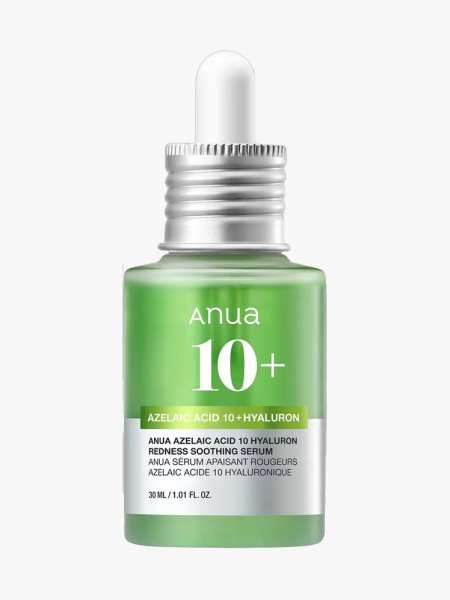
Best for Redness: Anua Azelaic Acid 10 Hyaluron Redness Soothing Serum
 Save to wishlist
Anua
Azelaic Acid 10 Hyaluron Redness Soothing Serum
Amazon
Ulta Beauty
Allure contributing commerce writer Christa Joanna Lee applying the Anua Azelaic Acid 10 Hyaluron Redness Soothing Serum
Christa Joanna Lee
Why it's worth it: Redness can happen for all sorts of reasons—rosacea, inflammation, sunburn, or even an allergic reaction (in those cases, it's always best to check in with your dermatologist on treatment options). But if your skin is simply looking flushed because it's dry or your moisture barrier is compromised, Anua's Azelaic Acid 10 Hyaluron Redness Soothing Serum contains a Who's Who of calming ingredients. "The star is 10% azelaic acid, which is paired with niacinamide to help visibly reduce redness while gently evening skin tone," says Debra Jaliman, MD, a board-certified dermatologist based in New York City.
The soothing, fragrance-free formula also features panthenol, allantoin, beta-glucan, aloe vera, and a full lineup of Centella asiatica extracts to comfort sensitive, stressed skin. To address the dryness that's often behind temporary flushing, hyaluronic acid, glycerin, squalane, and ceramides help replenish moisture and reinforce the skin barrier. “It is quite gentle, feels hydrating, and tends to be well-tolerated even with consistent use,” says Sandra Oska, MD, a board-certified dermatologist based in Los Angeles and Santa Monica, California
Tester feedback from contributing commerce writer Christa Joanna Lee
LargeChevron
"There's no K-beauty brand taking over my bathroom counter quite like Anua. Nothing delivers an instant glow quite like the brand's Glow Pads or PDRN Hyaluronic Acid Hydrating Capsule Mist, but this serum takes a different approach. Instead of chasing immediate hydration, it's focused on tackling redness and uneven tone—though my perpetually dry skin still appreciates the boost of hydration from hyaluronic acid, glycerin, and squalane in this formula.
I have extremely dry, redness-prone skin with melasma, so I'm still giving the azelaic acid a little more time to work its magic on discoloration and lingering redness. What I loved right away, though, was the texture: It sinks in instantly, feels incredibly lightweight, leaves behind zero sticky residue, and never pills under my makeup when I use it in the morning." —Christa Joann Lee, contributing commerce writer
More to know
LargeChevron
- Key ingredients: 10% azelaic acid, niacinamide, panthenol, allantoin, beta-glucan, aloe vera, Centella asiatica, hyaluronic acid, glycerin, squalane, ceramides
- Who it's for: everyone, especially people with redness due to dryness or sensitive skin
- Fragrance-free: yes
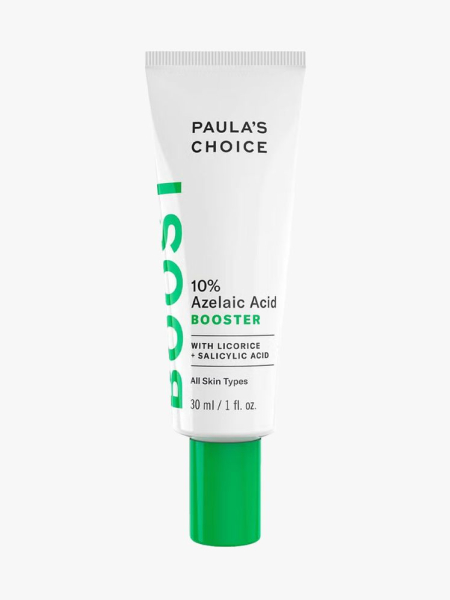
Best for Dark Spots: Paula’s Choice 10% Azelaic Acid Booster
 Save to wishlist
Paula's Choice
10% Azelaic Acid Booster
Amazon
Dermstore
Sephora
Why it's worth it: You did your best not to pick at that blemish. You waited patiently for it to disappear. And then, of course, it left behind a post-acne mark as a little souvenir. Paula’s Choice’s 10% Azelaic Acid Booster “is a reliable option for acne that also treats redness or post-breakout marks,” says Dr. Queller, who adds that its lightweight, non-clogging gel-serum texture can be mixed into moisturizer for drier skin types. The formula uses 10% azelaic acid to visibly brighten dark spots, even skin tone, and fade lingering hyperpigmentation, while 0.5% salicylic acid (BHA) works inside pores to smooth rough texture and keep congestion in check. “The azelaic-salicylic acid combo not only helps treat skin after breakouts, but also helps prevent new ones,” adds Corey L. Hartman, MD, a board-certified dermatologist based in Birmingham, Alabama. Licorice root extract rounds out the formula, adding extra redness-soothing benefits without irritation—ideal when acne and sensitivity overlap.
More to know
LargeChevron
- Key ingredients: 10% azelaic acid, 0.5% salicylic acid, licorice
- Who it's for: people with post-acne marks or those looking for acne prevention
- Fragrance-free: yes
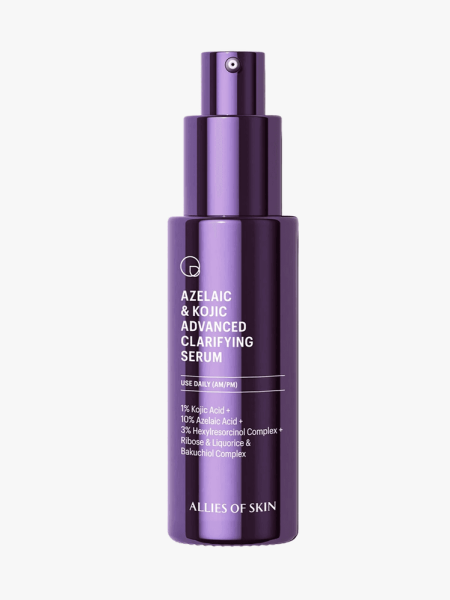
Best for Acne-Prone Skin: Allies of Skin Azelaic and Kojic Advanced Clarifying Serum
 Save to wishlist
Allies of Skin
Azelaic and Kojic Advanced Clarifying Serum
Amazon
Nordstrom
Dermstore
Why it’s worth it: Allies of Skin was inspired by the belief that skin-care should be effective and simple (a.k.a. work smarter, not harder). The Azelaic & Kojic Advanced Clarifying Serum lives up to that mission, especially if you’re dealing with oily or skin prone to blemishes. This multitasking formula helps unclog pores, reduce excess oil, and calm active breakouts, all while fading stubborn dark spots. “Incorporating azelaic acid, bakuchiol, kojic acid, and hexylresorcinol, this serum can help target discoloration and uneven skin tone and texture, while also brightening the skin and reducing redness,” says Marisa Garshick, MD, a board-certified dermatologist in New York City. “I especially love that it’s lightweight and absorbs easily.” It's fragrance-free, non-comedogenic, and works great under your makeup or SPF, making it a great choice for preventing breakouts day or night.
More to know
LargeChevron
- Key ingredients: 10% azelaic acid, bakuchiol, kojic acid
- Who it’s for: people with oily or acne-prone skin
- Fragrance-free: yes
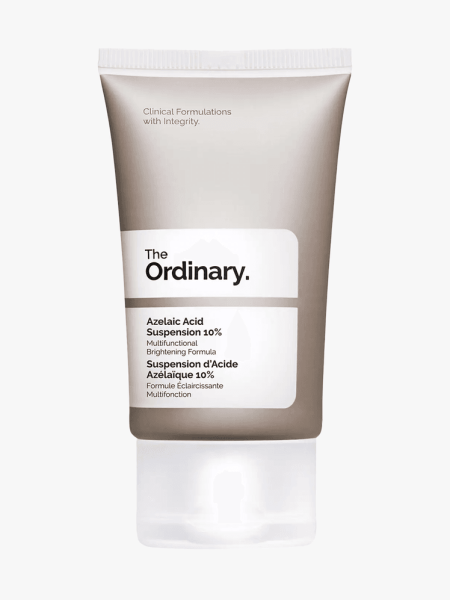
Best Budget: The Ordinary Azelaic Acid Suspension 10%
 Save to wishlist
The Ordinary
Azelaic Acid Suspension 10%
Amazon
Nordstrom
Ulta Beauty
Why it's worth it: The Ordinary's Azelaic Acid 10% Suspension Brightening Cream is "one of the most accessible and effective azelaic acid products out there," says Aderonke Obayomi, MD, a board-certified dermatologist based in New York City. At a 10% concentration, it's "strong enough to make a noticeable difference in uneven texture, mild acne, and post-inflammatory hyperpigmentation, yet gentle enough for everyday use," she says. True to the brand’s no-frills approach, the minimalist formula lets azelaic acid take center stage without a long list of supporting actives. It also layers easily into your routine: "The lightweight formula glides on smoothly before your morning sunscreen, and azelaic acid is one of my go-to pregnancy-safe skin-care ingredients," says Jocelyn Gandelman, MD, a board-certified dermatologist based in New York City.
More to know
LargeChevron
- Key ingredient: 10% azelaic acid
- Who it's for: everyone, including sensitive skin
- Fragrance-free: yes
Frequently Asked Questions
What is azelaic acid?
When most people hear the word "acid," they usually think of a harsh chemical, but actually, azelaic acid is a sensitive, skin-friendly molecule (well, depending on its concentration, which we’ll dive into) derived from barley, rye, and wheat. It's part of the dicarboxylic acid family and has antibacterial, keratolytic, comedolytic, and antioxidant properties. Azadeh Shirazi, MD, a board-certified dermatologist based in La Jolla, California, tells Allure that azelaic acid works by inhibiting tyrosinase (a.k.a. the enzyme involved in pigment production) and, thereby, "reduces hyperpigmentation" and describes this buzzy acid as a "dermatologist favorite, jack-of-all-trades, and one of the most underrated skin-care ingredients." Okay, we’re officially sold.
Dr. Green echoes Dr. Shirazi's sentiments. Both professionals also note that the benefits of azelaic acid include antimicrobial and anti-inflammatory properties, excellent for treating skin conditions like acne and rosacea, as it kills breakout-causing bacteria and reduces inflammation. This versatile acid, also considered a gentle exfoliant, stimulates cell turnover as well. As such, Dr. Green says that azelaic acid "can help reduce the appearance of acne scars."
Who can use azelaic acid?
The good news is that azelaic acid is safe for all skin types, but Dr. Green advises those with sensitive skin to start using it "once a day, increasing the frequency to twice a day after several weeks." And, if you experience any irritation, it's best to consult your doctor before continuing.
You also need not worry too much about adjusting your entire skin-care routine to incorporate azelaic acid. Fortunately, Dr. Green and Dr. Shirazi agree that azelaic acid is generally gentle enough and safe to use with other ingredients like vitamin C, AHAs, BHAs, and retinoids. However, says Dr. Green, "If you have prescription-strength azelaic acid, Retin-A, or other topical creams, you should consult a dermatologist."
Depending on your skin type and concerns, azelaic acid can be found in over-the-counter products in all sorts of strengths, from as low as 1% to as high as 15%, with the highest prescription-strength concentration coming in at 20%, per Dr. Shirazi. However, lower concentrations can be just as effective and “may help prevent skin irritation" for those with reactive, sensitive skin, says Dr. Green. "Skin-care products with a low concentration of azelaic acid can be beneficial when it comes to unclogging pores, preventing acne breakouts, and soothing skin inflammation," he adds. For those with acne-prone skin, lower concentrations of azelaic acid are often combined with other actives, such as AHAs and BHAs, for a multi-pronged approach.
Can azelaic acid be used with tretinoin?
Yes, azelaic acid can be used alongside retinoids like retinol and tretinoin, and it's a combination dermatologists frequently recommend because the two ingredients "complement each other very well," says Dr. Queller. While tretinoin increases skin cell turnover, stimulates collagen production, and improves acne and signs of photoaging, azelaic acid has anti-inflammatory, antibacterial, and pigment-reducing properties. Together, “they're especially beneficial for addressing multiple skin-care concerns at once,” such as acne, post-inflammatory hyperpigmentation, melasma, and early signs of aging, says Dr. Queller.
Rather than simply increasing the strength of tretinoin—which can also increase the likelihood of redness, peeling, dryness, and irritation—Dr. Queller often prefers adding azelaic acid because it "enhances results for acne and discoloration while helping reduce inflammation and the appearance of persistent pigmentation." If you have sensitive skin, eczema, or a compromised skin barrier, she recommends introducing the ingredients gradually under a dermatologist's guidance. Many patients can eventually use both in the same evening routine by applying azelaic acid first, followed by tretinoin and then moisturizer, though those with sensitive skin may find it more comfortable to use azelaic acid in the morning and tretinoin at night.
Meet the experts
- Jocelyn Gandelman, MD, a board-certified dermatologist at Schweiger Dermatologist based in New York City
- Marisa Garshick, MD, a board-certified dermatologist in New York City
- Michele Green, MD, a board-certified dermatologist based in New York City
- Corey L. Hartman, MD, a board-certified dermatologist and founder of Skin Wellness Dermatology based in Birmingham, Alabama
- Debra Jaliman, MD, a board-certified dermatologist based in New York City
- Aderonke Obayomi, MD, a board-certified dermatologist and assistant professor at Mount Sinai, based in New York City
- Sandra Oska, MD, a board-certified dermatologist at Dermatology Institute & Skin Care Center based in Los Angeles and Santa Monica, California
- Jenna Queller, MD, a board-certified dermatologist and founder of DermWorks based in Boca Raton, Florida
- Ava Shamban, MD, a board-certified dermatologist based in Beverly Hills
- Azadeh Shirazi, MD, a board-certified dermatologist based in La Jolla, California
How we test and review products
When Allure tests a product, our editors look at it from every angle in an effort to best serve you. We review ingredients, scrutinize brand claims, and, when necessary, examine peer-reviewed scientific and medical studies. In addition to testing each and every product that’s included in each and every review, we rely on experts who shape their fields, including dermatology, cosmetic chemistry, and medicine, to help us vet the ingredients and formulas.
For our list of the best azelaic acid products, we considered each product’s performance across five primary categories: product ingredients and efficacy, packaging, fragrance, texture, and product wear. Every product was determined to have excelled in each category by our editorial team, which is composed of in-house writers and editors as well as contributors—along with special consideration from board-certified dermatologists. To learn more information on our reporting and testing processes, read our complete reviews process and methodology page.
Our staff and testers
A beauty product is a personal purchase. You might be searching for a face cream to address persistent dryness or a new nail product to add to your Sunday self-care routine; you may simply be browsing around for the latest launches to hit the hair market. No matter what you seek or your individual needs and concerns, Allure wants to ensure that you love anything we recommend in our stories. We believe that having a diverse team of writers and editors—in addition to the wide range of outside testers and industry experts we regularly call upon—is essential to reaching that goal.
After all, can we really say a skin-care product is the "best" for people over 50 if the only testers we've solicited opinions from folks who have yet to hit 30? Can we honestly deem a high-end diffuser worthy of your hard-earned cash if it’s never been tested on curls? We're proud that our staff spans a wide range of ages, skin tones, hair textures, genders, and backgrounds, which means that we are able to fairly assess any beauty product that comes into the beauty closet.
Leave a Reply